
Forthcoming · 2026
Predatory AI
How We Can Resist Corporate Capture of the Human Mind
Couldry examines the 'social contract' we are quietly forming with profit-driven AI, and asks how we can resist ceding our minds to corporate systems.
Pre-order →
New · 2024
The Space of the World
Can Human Solidarity Survive Social Media and What If It Can't?
Couldry offers a radical new vision of how to design our digital spaces so that they build, rather than erode, solidarity and community.
Read More ↓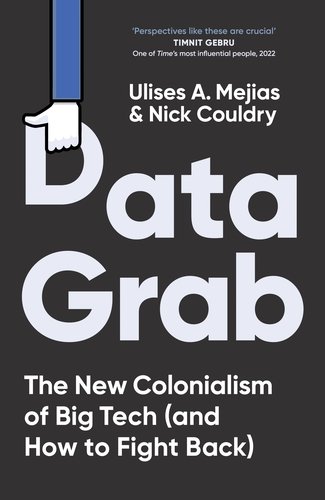
New · 2024
Data Grab
The New Colonialism of Big Tech and How to Fight Back
A blistering exposure of the predatory world of data colonialism and how our lives are being turned into raw material for digital capitalism.
Read More ↓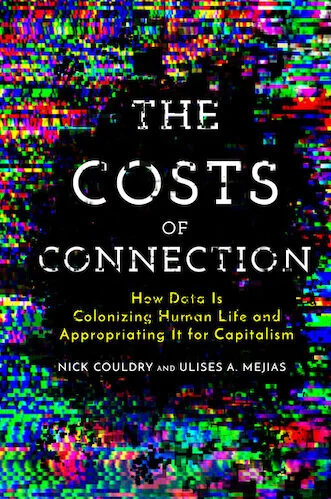
Foundational · 2019
The Costs of Connection
How Data Is Colonizing Human Life and Appropriating It for Capitalism
The groundbreaking book that introduced the concept of data colonialism as a framework for understanding big tech's exploitation of human life.
Read More ↓
New · 2024
The Space of the World
Can Human Solidarity Survive Social Media and What If It Can't?
Over the past thirty years, humanity handed over to big tech decisions that have allowed them to build our "space of the world" — the highly artificial space of social media platforms where much of our social life now unfolds. The toxic effects on social life, young people's mental health, and political solidarity are well known, but the key factor underlying all this has been missed: the fact that humanity allowed business to construct our space of the world at all and then exploit it for profit. In the first book of his trilogy, Humanising the Future, Nick Couldry offers a radical new vision of how to design our digital spaces so that they build, rather than erode, both solidarity and community.
Reviews
"One of the most pressing questions of our time is the impact of social media on our life-world and our sense of self. This book by Nick Couldry provides the most subtle, far-reaching and theoretically balanced answer to that question yet."
— Axel Honneth, Columbia University"A truly astonishing book. His analysis digs much deeper than the design of the digital platform industry; he relates the problems of a toxic digital world to the commercialization of public space and climate change."
— Jose van Dijck, Utrecht University"Couldry writes with urgency, clarity, purpose and deep feeling about what we have lost in ceding our digital spaces to large platform companies — and what we can get back."
— Eli Pariser, Co-Director, New_ Public"Technologies are made by humans, yet not always humane. Couldry takes a deep dive into how capitalist norms render social justice an afterthought. A much-needed manifesto for our civic future."
— Zizi Papacharissi, author of After Democracy
New · 2024
Data Grab
The New Colonialism of Big Tech and How to Fight Back
In this essential and original work, Mejias and Couldry lay out a powerful and persuasive analysis of the logical continuity between modern colonialism and the extraction of data by Big Tech and its platforms. They show how our personal data is being treated as a cheap resource to be mined, much like natural resources were extracted during historical colonialism. Their call to resist data colonialism could not be more urgent or more timely.
Reviews
"A brilliant account both of colonialism and Big Tech, and a bold and provocative argument that the latter is a version of the former because of the way it dispossesses people of what should be theirs: data about their lives."
— David Hesmondhalgh, author of The Cultural Industries"A blistering, vital exposure of the predatory world of data colonialism. Mejias and Couldry urge us to wake up to the invasive and extractive world of today's Big Tech."
— Mike Savage, author of Social Class in the 21st Century"I particularly recommend this book for providing examples of local and vocal initiatives across various continents. A true eye-opener."
— José van Dijck, Utrecht University
Foundational · 2019
The Costs of Connection
How Data Is Colonizing Human Life and Appropriating It for Capitalism
The book that introduced the concept of data colonialism — the groundbreaking framework for understanding how big tech companies' exploitation of data is a new form of colonialism, as fundamental as the historical appropriation of territory and natural resources. Couldry and Mejias offer a fundamental new way to understand the unprecedented reorganization of social life driven by digital platforms, and chart a path toward resistance.
Reviews
"Couldry and Mejias offer a fundamental new way to understand the unprecedented reorganization of social life driven by digital platforms."
— Berkman Klein Center, Harvard University"Their framework of data colonialism provides a powerful lens for understanding how digital technologies are reshaping human relationships and social structures worldwide."
— Stanford University Press